Is Solo Travel Safe After 50?
The Story First-Timers Actually Need to Hear
It was 9:14 on a Sunday night, and Linda was standing in her bedroom staring at an empty suitcase.
Not half-packed. Not almost there. Empty. Her passport sat on the bed beside three folded tops she’d moved from one spot to another three times already. Her shoes were lined up against the wall like they were waiting to give evidence. Her flight to Lisbon left in eleven hours.
Her phone buzzed. Her daughter. “You’ll be amazing, Mum. Call me when you land.”
Linda read it twice. Then she looked at the suitcase. Then she said, out loud, to nobody, the sentence she’d been pressing down for weeks.
“What on earth am I doing?”
She was 62 years old. She had never taken a holiday alone. Not once. She had travelled as a daughter, then as a wife, then as the person who remembered everyone else’s passports, sun cream, chargers, and medication. She knew how to travel. She just didn’t know how to travel alone. That felt like an entirely different skill. Maybe even a different life.
Sound familiar? If you’re reading this with a booking you’re quietly terrified of, that’s exactly why I’m telling you Linda’s story.
Safe Enough to Actually Go
Lisbon hadn’t been meant as a grand adventure. Four nights, one direct flight, one small hotel, one city. No mountain hikes, no overnight trains, no remote villages, no complicated plan. Her friend Jean had called it “a beginner solo trip,” which had made Linda laugh at the time. Beginner. As if she were signing up for pottery.
But Jean had been serious. “Don’t make your first solo trip too big,” she’d said. “Make it safe enough to actually go.”
That line had stayed with Linda, because it understood something most travel advice misses. The real battle isn’t finding a hotel. It isn’t buying insurance or booking the flight. The real battle is leaving the house.
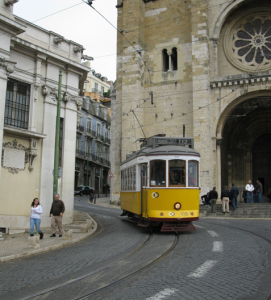
She’d booked the whole thing three months earlier on a bright Thursday morning, coffee in hand, full of sun. A travel article had shown a yellow tram climbing a steep Lisbon street and something had woken up in her chest. Not sadness, not nostalgia. Pure, clean want. She wanted warm tiles underfoot. She wanted coffee in a square. She wanted a room that was only hers. She wanted to wake up and ask, “What do I want today?”
That question had nearly made her cry. She couldn’t remember the last time she’d asked it. So she booked the trip. And then, right on cue, the fear arrived.
At Our Age
Her son asked if Lisbon was safe. Her sister suggested a group tour. Her neighbour called her brave, which Linda hated more than anything. Brave sounded like danger with lipstick on. She didn’t want to be brave. She wanted people to say “Lovely, have fun.” Instead, every reaction made the trip sound bigger, riskier, stranger.
Then a woman from her walking group leaned in and lowered her voice. “I wouldn’t travel alone now. Not at our age.”
At our age. The phrase followed Linda home and refused to leave. It sat beside her while she made tea. It followed her into the shower. It climbed into bed with her at night. At our age — what did that actually mean? Too old to read a map? Too old to sit in a café? Too old to check into a hotel without a chaperone? Too old to want something new?
She didn’t know. But the phrase worked on her the way doubt always does — quietly, persistently, wearing the costume of common sense. By the week before departure, she was actively searching for reasons to cancel. A weather warning. A sore knee. A news story. Anything that would let her quit without having to admit what was actually happening.
Nothing came. So there she was. Sunday night. Empty suitcase. Eleven hours to go.
Fear Loves a Blank Space
She didn’t pack that night. Not yet. First she went downstairs, made toast she didn’t want, and opened the notebook where she’d written her travel plan. Jean had made her do it. “Fear loves blank spaces,” Jean had said. “So fill them.”
On the first page, Linda had written out her first day in six steps. Flight time. Arrival time. Official taxi rank only. Hotel address in front pocket. Check-in after 3pm. First day plan: hotel, short walk, early dinner, sleep.
That was it. Six steps, not a hundred. She read them three times, and for the first time that night, her breathing slowed. The trip had been a fog — a vast, threatening fog of what-ifs. Now it was a sequence. Get to airport. Board plane. Land. Get taxi. Check in. Eat. Sleep.
She had done harder things than that. She’d raised two children, sat beside her husband through chemotherapy, sold a house, handled bank forms and hospital calls and funerals and Christmas mornings when grief sat in every chair. She knew hard. This wasn’t the same kind of hard. This was new — and new has a habit of dressing itself as danger. That doesn’t mean it is danger.
“Lucky You”
She slept for three hours. At 5:40am she zipped the suitcase shut. At 6:15 the taxi arrived. The driver lifted her bag into the boot without being asked. “Holiday?” he said.
“Yes.”
“Anywhere nice?”
“Lisbon.”
“Lucky you.”
That was all. No warning. No raised eyebrow. No speech about being careful. Just lucky you. Linda looked out at the quiet streets and let herself feel, for the first time, one inch of genuine excitement.
The airport was reassuringly dull. Security was slow. The coffee was overpriced. The gate changed once. Nobody looked at her and wondered why she was travelling alone — because nobody cared. She’d imagined herself under a spotlight. Instead she was one person among hundreds, invisible in the best possible way. A man watched football clips on his phone. A couple argued about boarding passes. A woman about Linda’s age ate a banana and read a crime novel.
The world was not watching. The world was busy. That helped enormously.
She Had a Reservation. She Had a Passport. She Had Arrived.
The flight landed on time. Linda followed signs to arrivals, ignored a man offering a “cheap taxi,” and walked directly to the official rank — exactly as planned, exactly as written in the notebook. The driver took her printed hotel address and nodded. No drama, no confusion, no strange detour.
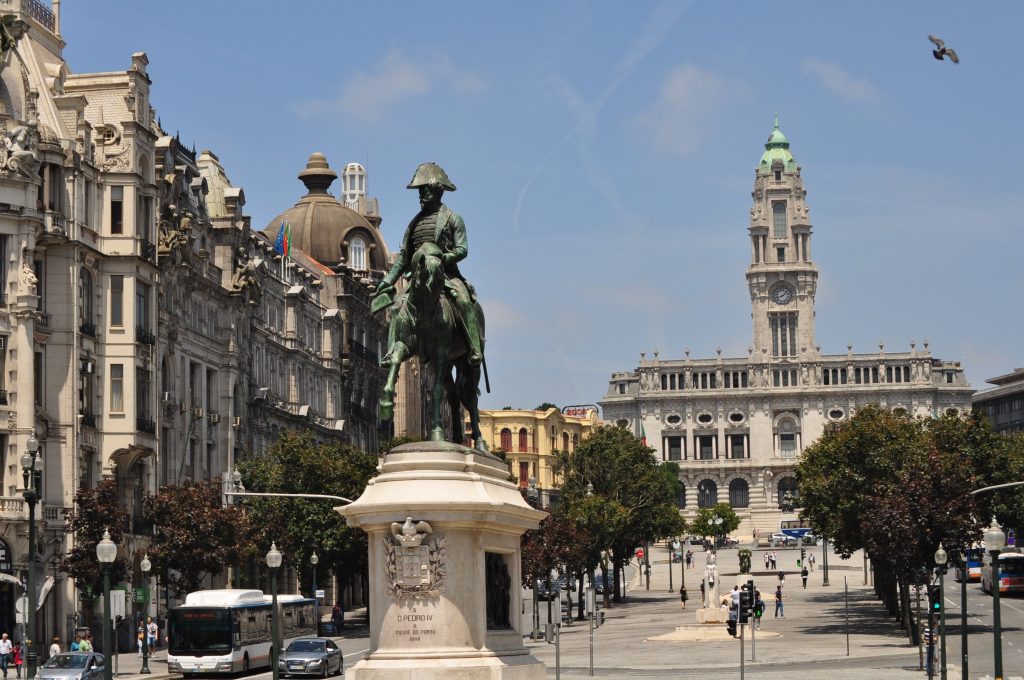
Lisbon appeared through the taxi window in pieces. Palm trees. Graffiti. Sunlit walls. Blue tiles. Laundry strung between balconies. Hills everywhere. Then the taxi stopped outside a narrow hotel entrance, and for one fast second, panic flashed. She was in another country. Alone. No husband beside her, no friend to laugh with, no child to organise.
Just her. Then the hotel door opened.
A young woman at reception smiled. “Welcome, Linda.” Her name sounded different in that room. Not old. Not foolish. Not brave. Just expected. She had a reservation. She had a passport. She had arrived. That was all the proof required.
The Silence She Had Been Afraid Of
The room was small and white and perfect. A desk, a window over a side street, a bathroom with tiny blue tiles. She locked the door, checked it twice, texted her daughter. “Arrived. Hotel lovely. All fine.” The reply was immediate. “Proud of you.”
She put the phone down. And then — the room went quiet. Very quiet. This was the moment she’d actually feared, she realised. Not crime. Not getting lost. Not the airport. This. The silence after arrival. Nobody asking what time dinner was. Nobody needing the bathroom. Nobody turning on the television without asking.
She sat on the edge of the bed. “What now?” she whispered. There was no answer. And then she laughed — because that was the whole point. She got to choose.
She unpacked. Washed her face. Put on comfortable shoes. Then she took the paper map from her bag, where she’d drawn a small circle around the hotel covering three streets — not the whole city, not a heroic march, just a safe loop — put her room key in her zipped pocket, took one bank card, left her passport in the safe, checked her phone battery, and went outside.
The City Did Not Care That She Was Alone
Lisbon was louder than she’d expected. Trams squealed, scooters zipped past, people smoked outside cafés, a man carried crates of oranges, a woman shook a rug from a balcony. Linda walked slowly and noticed everything: the uneven pavements, the way the streets sloped, which roads were bright and busy. A bakery with custard tarts in the window. A pharmacy. A small supermarket. Useful places. Normal places. Signs that daily life happened here and was continuing to do so without incident.
She bought water. Then she bought one custard tart and ate it standing outside the bakery. The pastry shattered down her coat. She smiled like a child. Nobody saw. Or maybe they did. It didn’t matter.
She returned to the hotel without getting lost. The whole walk took 28 minutes. It felt like crossing a border — not a country border. A personal one. She’d left alone, walked a small part of a foreign city, and come back safely. The fear lost a little authority. Not all of it. Just enough.
Dinner For One
That evening brought the hardest test, and she knew it. She’d been thinking about dinner since landing. Room service had occurred to her. Then she’d remembered Jean’s other rule. “Do not hide from the trip you paid for.” So she asked reception for somewhere nearby — somewhere simple, somewhere close. The receptionist marked a place on the map. “Very good. Five minutes. Many solo guests go there.”
Solo guests. The phrase helped. It made her part of a category rather than a problem.
The restaurant had yellow walls and wooden tables. The waiter said, “One?” and Linda felt the familiar small sting of it — just one, only one, one lonely woman, one spare chair. But the waiter hadn’t said “just.” He’d only said one. She nodded. He showed her to a table by the wall, brought bread, and left her to it.
At first she pretended to study the menu. Then she looked around the room. A businessman ate alone. A young woman wrote in a notebook. Two friends shared dessert. A family tried to stop a toddler dropping bread on the floor. Nobody — not one person — glanced at Linda and registered anything at all. Her loneliness had felt enormous inside her head. In the restaurant, it was completely invisible.
She ordered soup, then fish, then a glass of white wine. Halfway through, she stopped performing. She put the menu down and just ate. She tasted the food properly. She listened to the room. She noticed she wasn’t waiting for anyone else’s mood. Nobody was bored. Nobody wanted to leave. Nobody disliked the restaurant. Nobody was rushing her.
Her own company didn’t feel empty. It felt unfamiliar. Those are not the same thing.
Unfamiliar is not empty. I can’t tell you how long it took me to learn that distinction, but once you feel it — really feel it — it changes everything.
Getting Lost Was Not the End
The next morning, she took a guided walking tour — part of the safety plan, partly because a tour gives structure and partly because it gives you people. The guide was funny. The group was a pleasant mix: two Canadian sisters, a retired teacher from Dublin, a couple from Germany, a man from Bristol travelling alone after divorce. Linda didn’t become lifelong friends with any of them. That wasn’t the point. For three hours she had company without obligation, and by lunch, the city felt considerably less strange.
Then, later, she made her first mistake. A wrong turn, then another. Phone signal dropped. The street became steep and quiet. Her knee started to ache. Fear came back fast and loud — it didn’t knock, it kicked the door open. You’re too old for this. You should have stayed with the group. This is how bad things happen.
Linda stopped walking. Another rule from Jean: do not keep moving while panicked. She stood near a tiled doorway, took three slow breaths, and did the least dramatic thing possible. She walked into a small shop. Bought a bottle of water. Showed the hotel name to the woman behind the counter. The woman pointed: downhill, then left, then right. Linda repeated it back. Twelve minutes later, she recognised the bakery.
The whole crisis had lasted less than twenty minutes. But something important had shifted. Linda hadn’t avoided trouble. She’d handled it. That’s a different thing entirely.
Confidence Arrives Quietly
By the third day, Linda moved differently through the city. Not carelessly — never that. She still kept her bag zipped, still avoided empty streets after dark, still checked taxi details, still texted her daughter each evening. But her body had stopped bracing for disaster. She knew the corner shop. She knew the café with the kind staff. She knew the hotel route from two directions. She knew the square where she liked to sit.
That’s how safety begins to feel real — not as a guarantee, but as familiarity. The city hadn’t become risk-free. No place is. But it had become readable.
On the third afternoon, she sat outside a café. Small table, one coffee, one book, sun on her arms. A tram climbed the hill ahead of her. The couple at the next table argued about directions — “You never listen” — and Linda looked down at her coffee and smiled.
For years she’d thought solo travel meant losing something. The shared jokes, the shared meals, the shared memories. And yes, that loss was real. She wouldn’t pretend otherwise. But she’d had no idea about the gain. The peace of it. The choice. The pace. The strange, specific pleasure of answering only to yourself — of spending an hour in a church because you want to, or skipping the famous viewpoint because you don’t, of eating cake for lunch and going back to the hotel at four, with nobody required to agree.
Safety Is Not a Mood. It Is a Practice.
That night her daughter called. “How are you really?”
Linda looked around the room. Her shoes by the bed. Her map covered in pencil marks. A paper bag on the desk holding one pastry saved for breakfast. “I’m good,” she said.
“No, really.”
“I mean it.” A pause. “Do you feel safe?”
Linda thought before she answered. “Yes,” she said. “But not because nothing feels scary. I feel safe because I know what to do now.”
That was the truth. She knew how to choose a hotel, how to arrive by daylight, how to ask for help and how to stop when flustered. She knew how to pay for ease rather than prove a point, and how to leave a place that felt wrong. She knew how to enjoy herself without becoming careless. Safety hadn’t been a mood she’d managed to hold onto — it was a practice. A set of small, sensible choices made before fear got loud.
She Had Nearly Missed This
On her final morning, Linda walked to a viewpoint. Early, when the streets were still quiet. Trainers, water, charged phone. The hill was steeper than she’d expected. She stopped twice. A younger version of herself might have pushed through on principle. This version rested without apology.
At the top, Lisbon opened below her. Red rooftops. A wide, glittering river. White light on the water. Ships in the distance. A church bell rang somewhere behind her.
And then the tears came. Not dramatic ones — quiet, private tears. She wasn’t crying because Lisbon was beautiful, though it absolutely was. She was crying because she’d nearly missed it. Not because someone had stopped her. Not because she was unable. She’d nearly missed it because fear had spoken with such confidence, wearing such a convincing costume.
Fear often sounds responsible. It says “be sensible.” It says “know your limits.” It says “people like you don’t do this.” Sometimes fear is genuinely useful — it keeps you from real danger, and you should listen to it then. But sometimes fear is just old grief. Old habit. Old embarrassment. Old stories wearing a safety vest. Learning the difference, standing at a railing in Lisbon with a view she almost didn’t come for, was the whole lesson.
“Next Time, Porto?”
At the airport, Linda bought a fridge magnet and a notebook. On the first page she wrote three words. “Next time, Porto?” She laughed when she wrote it. Next time. That was new.
Home looked the same when she got back. Same hallway, same kettle, same stack of post. But Linda was not exactly the same. She had proof now — not theory, not advice, not reassurance from a travel article. Proof in her body. She knew the feel of walking alone through arrivals. She knew the relief of finding her hotel. She knew the awkwardness of dinner for one and the small thrill on the other side of it. She knew that getting lost was not the end. She knew that asking for help was not failure.
She knew, now, that being over 50 did not make her fragile. It made her experienced, careful, aware, and prepared. Which are not weaknesses. They are, it turns out, rather excellent safety tools.
So — Is Solo Travel Safe After 50?
Linda wouldn’t answer with a slogan, and neither will I. Things can go wrong. Plans can fail. Cities can confuse you. People can take advantage. Bodies get tired. Confidence wobbles. Anyone who tells you otherwise is selling something.
But staying home has risks too. The risk of shrinking. The risk of waiting forever for the right companion, the right moment, the right stars to align. The risk of mistaking fear for wisdom. The risk of letting life become smaller than it has to be — not because anything stopped you, but because nothing pushed you.
Solo travel after 50 is safe when you make it safe. Not perfectly safe — nothing is. Not magically safe — wishful thinking isn’t a plan. Practically safe. You choose direct routes. You arrive in daylight. You stay central. You share your itinerary with someone who loves you. You buy proper insurance. You pack light. You keep your phone charged and your instincts listened to. You rest before you’re exhausted. You ask for help early. You don’t try to impress anyone. You build the trip for the person you are now — not the person you were at 25, not the person other people expect.
You. The woman with good judgement. The person who has already solved harder problems than a train ticket. The person who still — still — wants to see something new.
By the time Linda unpacked her suitcase, the question had changed. It was no longer “Is solo travel safe after 50?” It was “What would make this trip safe enough to begin?” That is the question that opens the door. Because the point is not to travel without fear. The point is to stop letting fear hold the passport.
Stay well. Stay safe. And stop letting fear hold the passport.